- The Digital PawPrint
- Posts
- Inside the PetTech shift at CES 2026: from novelty gadgets to real care systems
Inside the PetTech shift at CES 2026: from novelty gadgets to real care systems

The Digital PawPrint
January 22, 2026
CES 2026 was packed with “AI everywhere” energy — but in PetTech, the most important story wasn’t flashy. It was quiet. The category is moving away from one-off gadgets and toward something that looks a lot more like care infrastructure: passive sensing, computer vision, and behavioral analytics that can surface early signals and build a baseline of well-being over time.
That maturation is arriving at the perfect moment. U.S. pet industry spending continues to climb. The American Pet Products Association (APPA) reports $151.9B spent in 2024 and $157B projected for 2025, and more of that spend is shifting toward products that promise not just convenience, but better outcomes.
At CES 2026, the big leap wasn’t smarter toys. It was the sense that homes, routines, and even veterinary environments are being instrumented in the background — turning ordinary moments (sleeping, breathing, eating, drinking, moving) into patterns that can be tracked long before a problem becomes an emergency.
Health monitoring and well-being
The clearest signal of PetTech’s “real care” era was how much it resembled human health tech: non-contact monitoring, early detection, and systems designed to work without asking pets to behave differently.
Asahi Kasei Microdevices: turning recovery spaces into smart monitoring environments
Asahi Kasei Microdevices (AKM) brought one of the most clinical-feeling PetTech concepts to the show: a “smart cage” vitals monitoring demo for veterinary clinics that uses a cage-mounted millimeter-wave radar module to monitor breathing and heart rate in dogs and cats — transforming standard cages into “smart cages” that could alert veterinarians to irregularities.
AKM also showcased a smart pet collar demo with built-in temperature sensors that track a pet’s body surface temperature and the surrounding temperature, sending a Bluetooth notification if it detects a fever or excessive heat. This positions the collar less as a novelty wearable and more as an early-warning tool.
If CES 2025 hinted that pet health tech was catching up, CES 2026 made it feel like it’s beginning to adopt the same upstream mindset as human healthcare: monitor continuously, flag deviations early, and act before the crisis.
The Innovation Awards pipeline is leaning into measurable health
Even in the CES Innovation Awards ecosystem, you can see the category widening beyond cute and into measurable health: CTA highlighted honorees like Garmin’s Blaze equine wellness system and devices like Fompet (positioned around quick insights into pet body composition and obesity risk).
The takeaway: the industry’s center of gravity is shifting from entertainment to outcomes — and CES is increasingly rewarding that direction.
Feeding and hydration: routine care becomes a data stream
There’s a reason feeding tech keeps showing up at CES: eating and drinking patterns are some of the strongest everyday signals pet parents can track. CES 2026 pushed that idea further by making routine care more measurable, not just automated.
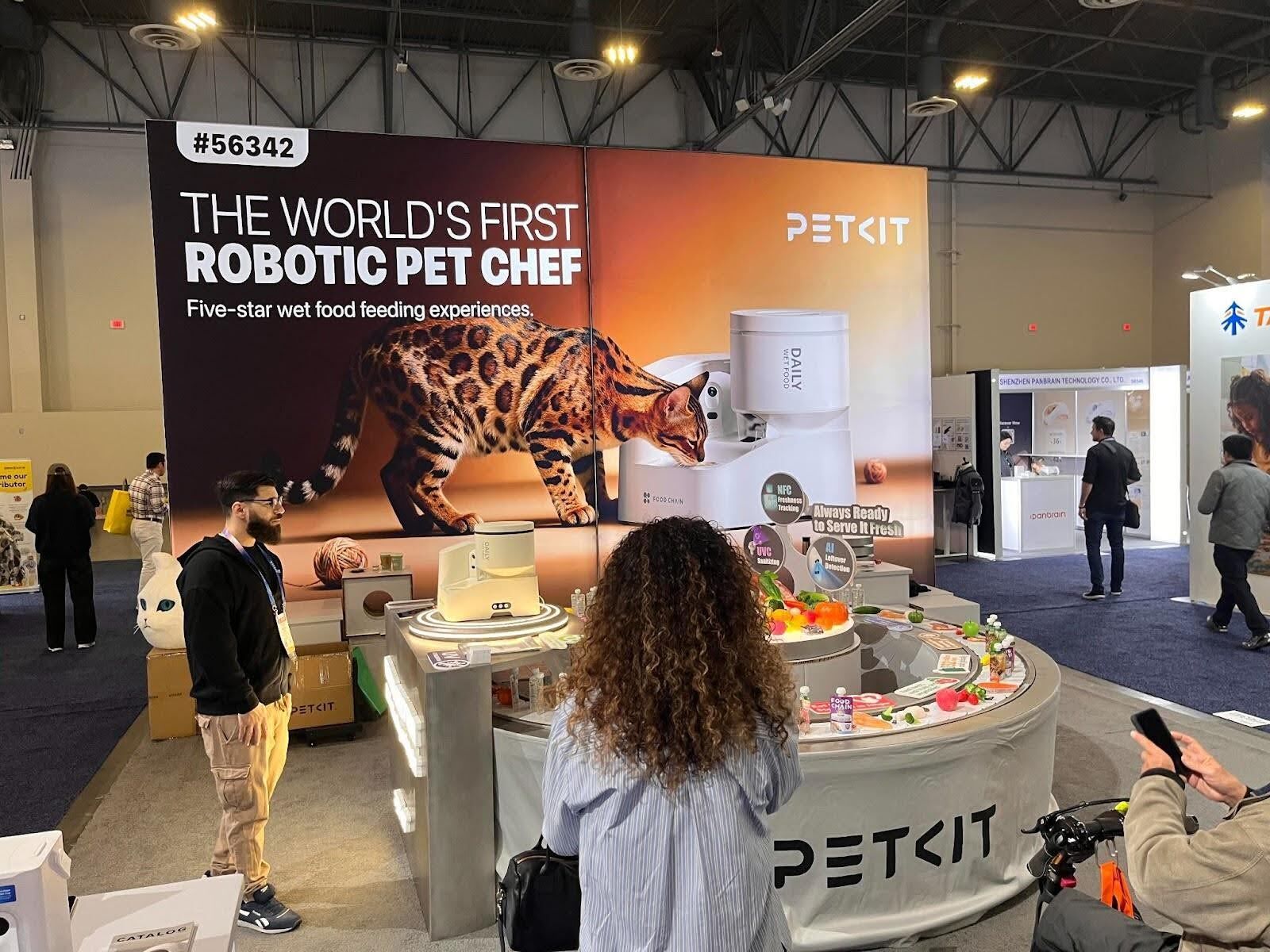
Petkit’s biggest CES 2026 reveal was its Yumshare Daily Feast, an automatic feeder designed for wet food — a category that’s historically been hard to automate safely. According to The Verge, it can serve up to seven days of wet-food meals, uses NFC-based tracking to dispose of uneaten food after 48 hours, and includes UVC lighting to help sanitize meal delivery.
It also includes an AI-powered 1080p night-vision camera (140-degree field of view) that tracks when a pet eats and how much remains before dispensing a fresh pack — and The Verge reported Petkit planned to offer the platform through pet food companies rather than selling direct, with partners setting pricing for the machine and refills.
On paper, that’s convenience. In practice, it’s something bigger: a feeder that turns “Did my cat eat?” into a trendline.
Hydration joins the same “behavioral insights” layer
Petkit paired the feeder with the Eversweet Ultra fountain, which (per The Verge) uses a camera and AI to recognize multiple pets and track individual drinking behavior and routines, with the device positioned around urinary health insights.
CES 2026’s message here was subtle but powerful: food and water aren’t just chores to automate. They’re signals to understand.
Outdoor PetTech and the “instrumented yard”
Not all PetTech lives on a collar or a feeder. Some of the most interesting CES 2026 products reframed the yard itself as a sensor-rich environment — one that can shape enrichment, safety, and awareness for pets and wildlife alike.
Birdfy Feeder Vista: the backyard turns into a 360-degree observation tool
Birdfy’s Feeder Vista leaned into the idea that the outdoors can be monitored like a smart room. MacRumors reported that the Vista uses two cameras capable of 14MP panoramic images and 6K video, with a bottom-up feeding system where an air pump moves seed from a sealed container to the tray — avoiding the classic hopper that blocks the camera view.
Birdfy has also emphasized that its feeding system enables control over feed speed and portion size (reducing waste and supporting healthier feeding behavior), while the CES Innovation Awards page notes its “precision air-pump” approach and positioning around cleaner, lower-disturbance feeding.
Birdfy Bath Pro: “best of innovation” energy for an overlooked part of backyard care
If Vista was about visibility, Birdfy Bath Pro was about turning a bird bath into a smart habitat. The CES Innovation Awards write-up highlights a dual-lens system: a panoramic wide-angle lens plus a 2K dynamic portrait lens that automatically tracks and zooms, paired with real-time AI species identification via the Birdfy app.
Even if Birdfy is framed as birdwatching tech, CES 2026 made a broader point: the spaces around our homes are becoming measurable ecosystems — and pets live inside those ecosystems too.
Grooming automation: Pet care as service infrastructure
Pet grooming is where “labor meets lifestyle,” and CES 2026 showed more tech aimed at the operational side of pet care — not just what happens at home.
Woofwoof Lux: a dog washing & drying machine that targets the pet service economy
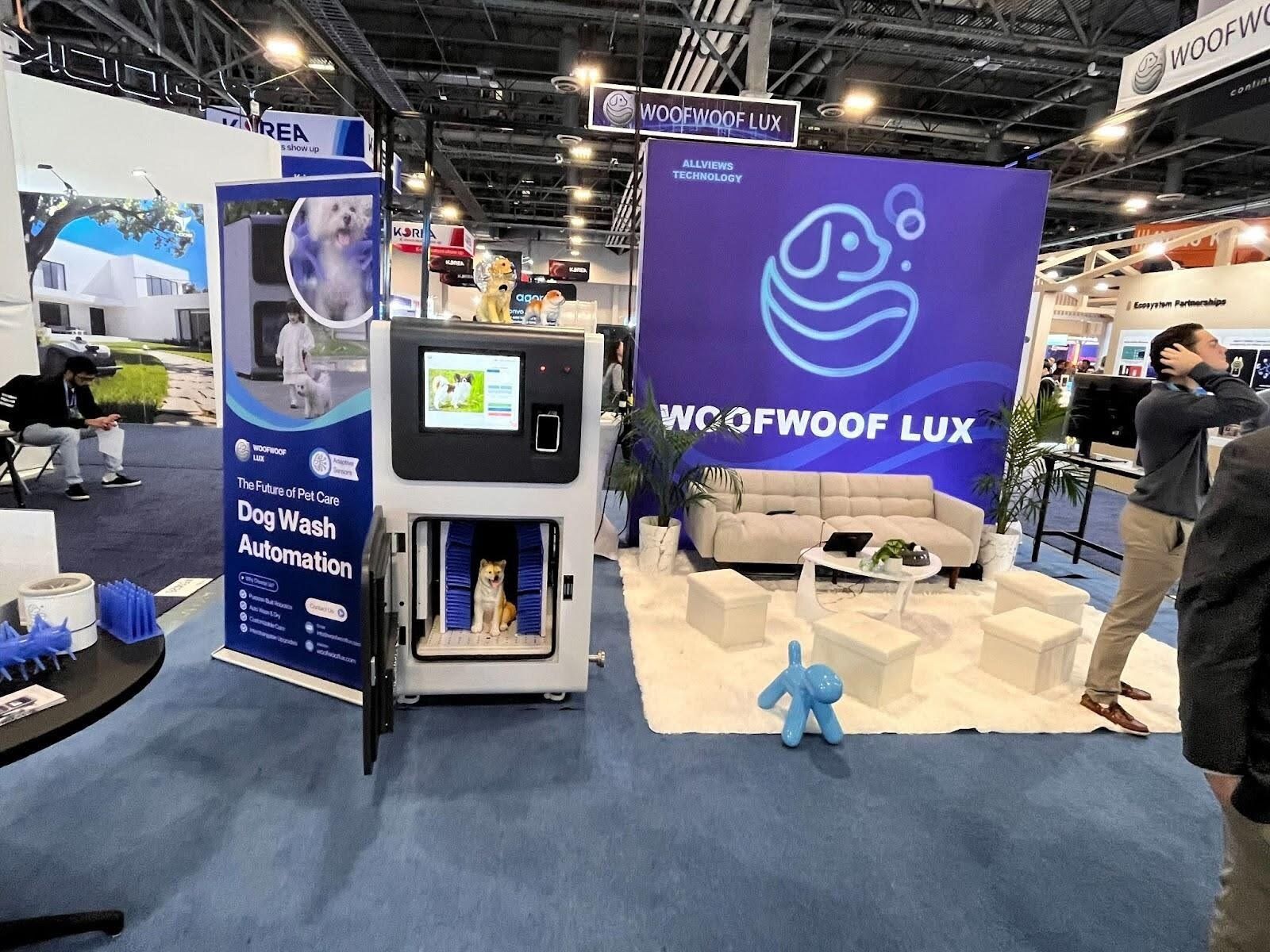
Woofwoof Lux returned with its AI-powered dog washing and drying machine, explicitly positioning the product for the pet service industry and noting it was previewed at CES 2025 and demoed again at CES 2026.
This is the kind of product that won’t be judged by how viral it looks on the show floor — it will be judged by throughput, safety, reliability, and whether it can become a repeatable “station” in grooming and pet-friendly real estate.
Companionship: robots that prioritize presence, not just tasks
One of the most CES 2026 developments wasn’t strictly PetTech hardware — it was the rise of pet-like robotics and companion devices that borrow the emotional logic of animals: personality, responsiveness, and the feeling that something is there with you.
FrontierX’s Vex (and Aura): pet monitoring becomes pet storytelling
FrontierX’s Vex updated the familiar pitch of pet cameras. Instead of watching from a fixed corner, The Verge reported that Vex follows pets around, films autonomously, uses visual recognition to identify specific pets, and edits daily footage into “moving narratives and shareable stories.”
It was paired with Aura, a larger companion bot aimed at humans that can read mood via body language and facial expressions, and talk using LLM-powered features — with both robots still in development and preorders planned “in the next six months,” per The Verge.
Even CTA’s own CES Day 3 recap called out Vex as a robotics highlight. That’s a sign that pet POV content is becoming a real product category, not just a gimmick.
Ollobot’s OLLO: “cyber pets” built for emotional continuity in the home
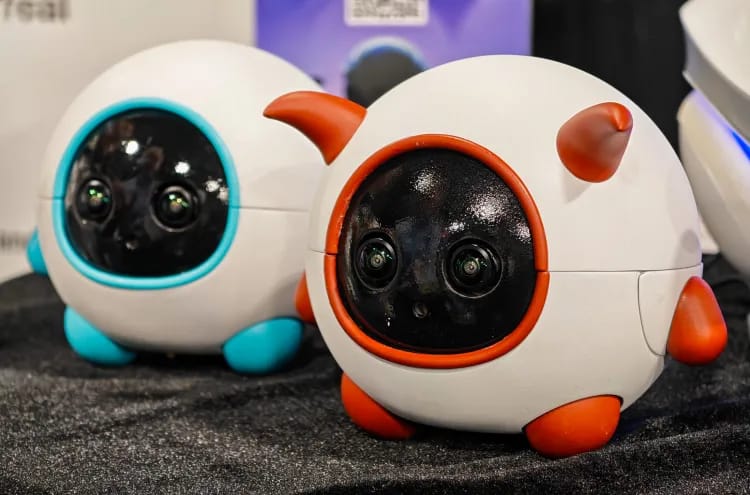
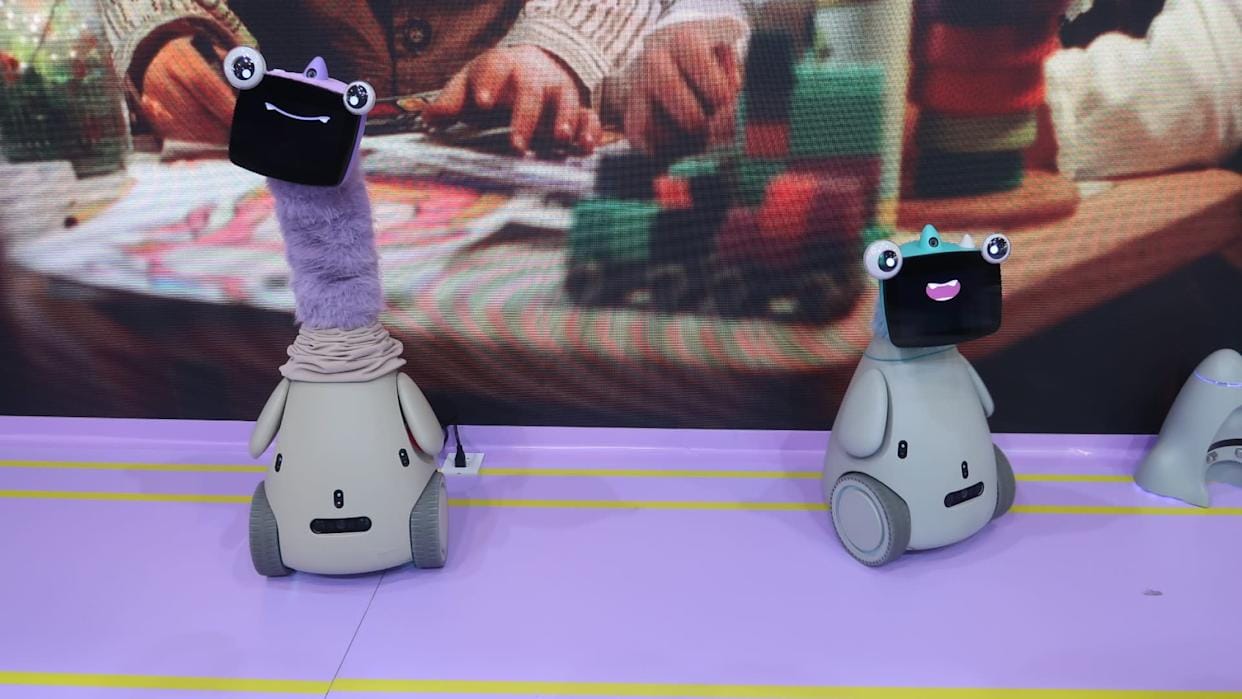
Ollobot’s OLLO was positioned less like a gadget and more like a character: Interesting Engineering describes it as a “cyber-pet” designed for home companionship and family bonding, built around a continuous observation-to-action loop and powered by a Vision-Language-Action model (per the company’s framing).
The Gadget Flow’s CES 2026 write-up adds more texture to the concept — describing multiple versions (short/long-neck models), a focus on nonverbal communication, and a “memory” element that’s meant to preserve continuity over time.
Whether these cyber pets become mainstream or remain a niche, they point to a real shift: companionship robotics is increasingly being designed around the emotional role pets already play in our lives.
Robot pets are multiplying: LilMilo and the return of Tombot
The Verge also noted Ecovacs marketing LilMilo as an emotional companion robot designed to recognize voices and adapt to user habits. This is another example of robotics companies moving beyond chores into presence.
And CES itself called out that Tombot returned with its robotic puppy concept, still positioned around companionship and emotional support — proof that “robot pets” remain sticky at CES, even as the category evolves.
What CES 2026 revealed about where PetTech is going next
CES 2026 reshaped the category’s narrative. The future looks less like a pile of disconnected gadgets and more like an integrated layer of care: passive monitoring that respects privacy, routine tracking that turns behavior into insight, and companion devices that aim for emotional continuity rather than novelty.
And yet, the biggest structural observation from the show still feels the same: PetTech is everywhere — in robotics, in smart home, in digital health — but rarely feels like it has one obvious “home” on the CES floor, even as CES formalizes it through categories like Pet & Animal Tech in the Innovation Awards.